Regional leaders gathered at the University of Arkansas this week as the Northwest Arkansas Council released a new growth strategy focused on how growth will shape cost, infrastructure and quality of life as Northwest Arkansas approaches more than 1 million people by 2050.
The Northwest Arkansas Council and a team of experts spent more than a year engaging residents, elected leaders and businesspeople and analyzing data, watersheds, city zoning, downtowns and growth patterns to develop the six-part strategy. Built in partnership with DPZ CoDesign and PlaceMakers and informed by analysis from Urban3 and Crafton Tull, it outlines a long-term framework to guide growth.
Council President and CEO Nelson Peacock emphasized that growth itself is not the challenge, but how it is managed will shape the region’s future.
“Growth creates opportunity, but it puts pressure on housing, infrastructure and the cost of living,” Peacock said. “How we grow will determine whether we stay competitive, affordable and connected while protecting the community character that makes this region special.”
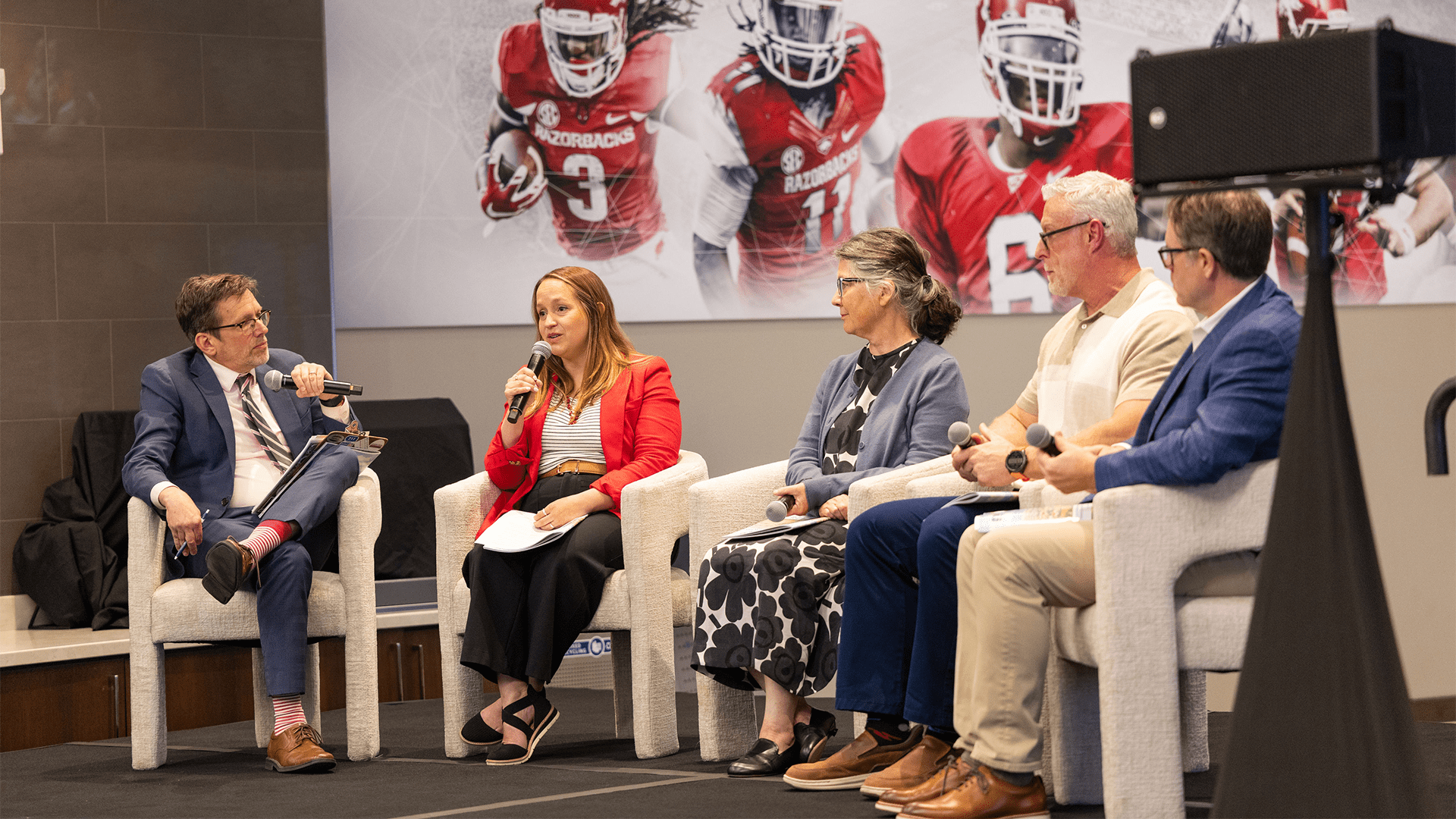
The strategy was the centerpiece of the Spring Meeting program, where leaders examined how current development patterns are influencing long-term costs for both residents and local governments. A panel discussion featuring regional leaders and planning experts explored those dynamics and what comes next.
“This is about collaboration. Every sector has to be involved,” said Meredith Bergstrom, senior program officer for the Home Region Program at the Walton Family Foundation. “When we do this right, the growth we’re facing feels like opportunity, not pressure.”
Today, many communities across Northwest Arkansas are expanding outward, extending roads, utilities and services over greater distances. While that approach can support near-term development, it often increases long-term costs and limits housing options over time. For many households, that translates into more time and money spent each day to access jobs, services and opportunity.
At the center of the discussion was a practical reality: housing, transportation and infrastructure are connected, and decisions in one area directly affect costs and outcomes in the others.
Analysis included in the strategy shows that if current patterns continue, the region could consume approximately 59 additional square miles of land by 2050. A more focused approach would reduce that footprint, improve financial outcomes and create an estimated annual surplus that could be reinvested in infrastructure and community priorities.
The strategy outlines six priorities to guide future decisions, including strengthening downtowns and community centers, aligning development with existing infrastructure, expanding housing options and improving coordination across systems like transportation and wastewater. A key focus is directing growth toward areas that can support it, particularly through more connected, walkable centers that serve as hubs for community life.
“Having good gathering places, public spaces, if you will, really do add to the health of the community and development,” said Johnson Mayor Chris Keeney.
Speakers throughout the program emphasized that many of the systems shaping daily life in Northwest Arkansas already operate at a regional scale. Housing markets, workforce patterns and infrastructure networks extend across city boundaries, even as planning decisions are often made locally.
The strategy points to the need to better align those decisions across communities, using and strengthening existing regional structures so infrastructure investments and development patterns work together rather than at cross purposes.
Housing, transportation and cost of living were also highlighted as closely connected challenges. As housing supply struggles to keep pace with demand, residents are traveling farther for work and daily needs, contributing to rising transportation costs and longer commutes across the region.
At the same time, much of the region’s new housing is concentrated in a limited range of product types, even as demand continues to diversify across price points and life stages. This mismatch between supply and demand limits choice for residents and increases pressure on both housing and transportation systems.
Addressing these challenges will require coordination across communities and sectors, with a focus on shaping how growth takes form across Northwest Arkansas so it feels intentional and designed with purpose rather than something that happens to people — a point emphasized during the panel by Susan Henderson, co-author of the strategy.
The strategy is supported by two core reports, a Regional Vision and a Growth Strategies Companion Report. The first three supporting strategy documents published this week focus on housing and development, transportation and mobility, and infrastructure and stormwater. Additional reports focused on regional character, funding and finance, and regional governance and will be shared in the coming weeks.
The Council will move directly into implementation, convening regional leaders and partners to define roles, identify near-term actions and establish clear ownership and metrics to track progress. The full report can be found here.