
2026 State of the Northwest Arkansas Region Report shows economic gains, with wages and housing affordability remaining challenges
Northwest Arkansas outpaced six peer metropolitan areas in job growth, business establishment growth and high-tech employment growth, according to the 2026 State of the Northwest Arkansas Region Report released Friday.
The region added 8,300 net new jobs in 2025, a 2.8% increase that brought total nonfarm employment to 302,100. The number of business establishments grew 7% to 16,876, while employment in high-tech industries increased 10.9% to 15,690.
“The region is adding jobs faster than its peers, but wages remain the lowest in the group,” said Mervin Jebaraj, director of the Center for Business and Economic Research at the University of Arkansas’ Sam M. Walton College of Business. “Sustained wage growth depends on helping existing employers expand, attracting investment and preparing workers for jobs that demand more specialized skills. The growth in high-tech employment is encouraging. Building on it can broaden career opportunities and help earnings keep pace with the cost of living.”
First released in 2011, the report marks 15 years of partnership between the Northwest Arkansas Council and the Center for Business and Economic Research. Commissioned by the Council and prepared by the center, it compares Northwest Arkansas with six peer metropolitan areas: Austin-Round Rock-San Marcos, Texas; Des Moines-West Des Moines, Iowa; Madison, Wisconsin; Durham-Chapel Hill, North Carolina; Raleigh-Cary, North Carolina; and Provo-Orem-Lehi, Utah.

The report shows continued growth across the economy. The region’s population reached 622,177 in July 2025, an increase of 14,744 residents in one year. Real gross domestic product grew 7.2% in 2024 to $35.57 billion, the fastest annual growth among peers.
Wages also increased but remained the lowest among the seven regions. The average annual wage rose 2.8% to $61,240 in 2025.
Housing costs continued to climb. The median price of an existing single-family home reached $375,100 in 2025, up 3.2% from 2024 and 65.8% since 2020. Both increases were the largest among peers
“The value of this growth is what it makes possible for the people who live here,” said Nelson Peacock, president and CEO of the Northwest Arkansas Council. “That means more opportunities to advance in a career, find a home near work and enjoy the quality of life that brought many of us here. None of that happens on its own. It takes employers, educators and communities planning and investing together.”



Other findings include:
- Unemployment: The unemployment rate rose from 2.8% in 2024 to 3.3% in 2025. It remained below the state rate of 4.1% and the national rate of 4.3%
- Family income: Median family income increased 7.8% to $101,800 in 2025 but remained the lowest among peers.
- Research: University of Arkansas research and development spending increased 4.1% to $230.6 million in 2024 but continued to trail peer regions.
- Airfare: Average domestic round-trip airfare at Northwest Arkansas National Airport declined 1.2% to $459 in 2025, the second highest among peers.
Because updated Census median household income data were unavailable, this year’s report uses U.S. Department of Housing and Urban Development median family income. The measure is not directly comparable with income figures in previous reports. Annual and five-year income comparisons use HUD data throughout.
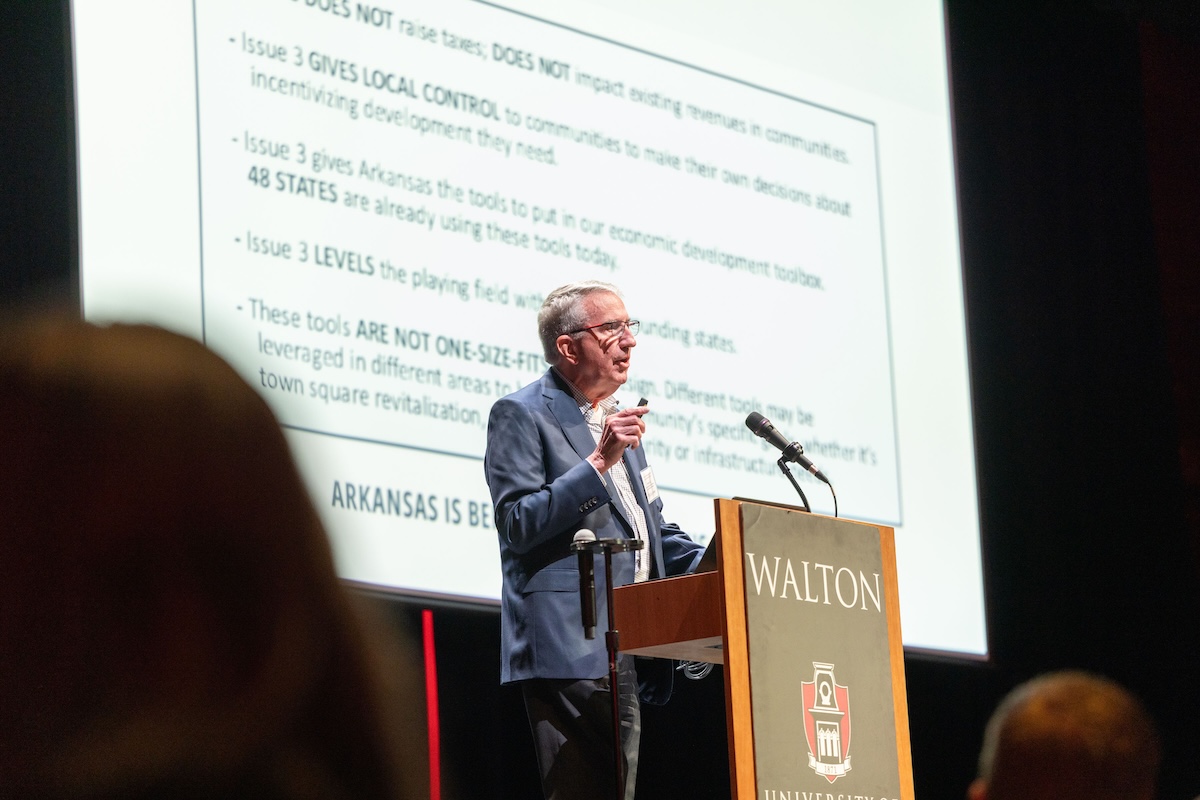
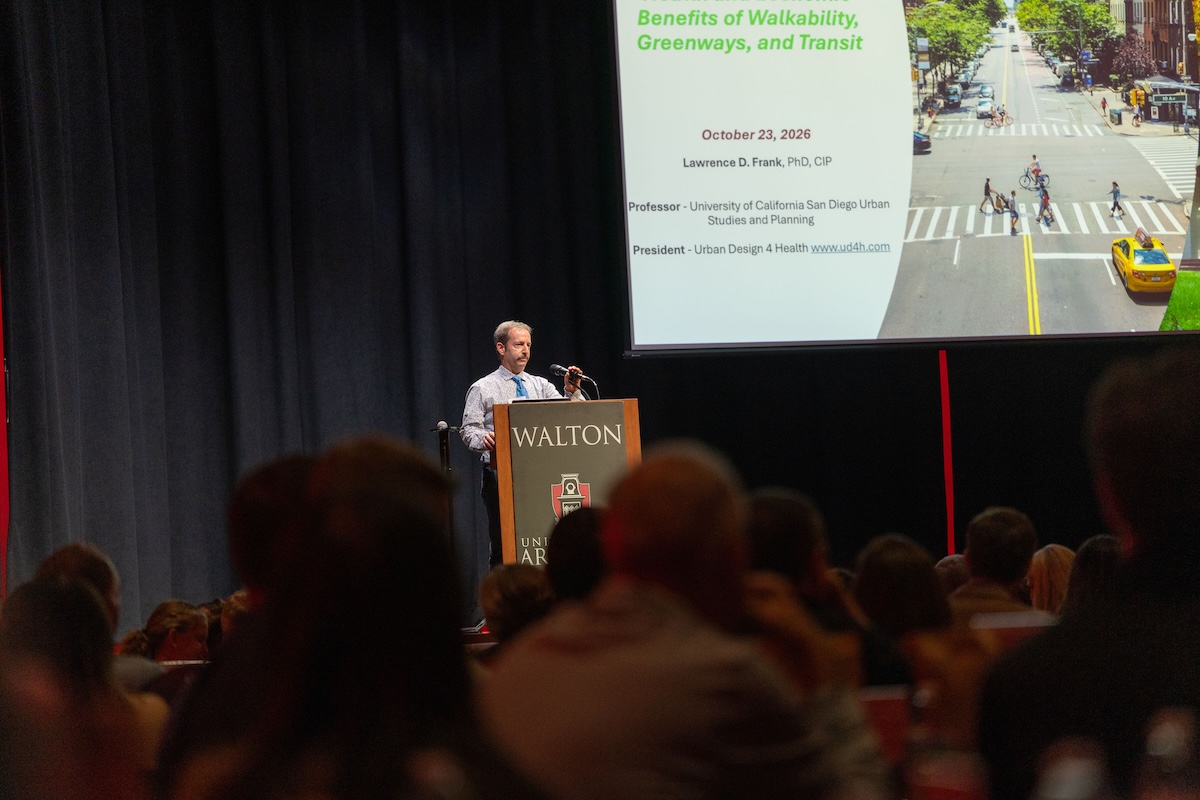
Jebaraj presented the findings Friday at the Council’s State of the Region luncheon at the Fayetteville Public Library. The program also featured Lawrence “Larry” Frank, who discussed how walkable, bikeable and connected communities can improve health, reduce health care costs and support workforce productivity.